22 Bathtub Decor Ideas That Make the Tub Area the Most Beautiful Part of the Bathroom
The bathtub is the largest single fixture in most bathrooms and the one with the most potential to be either a beautiful focal point or a neglected afterthought. Most bathtubs sit in a tiled alcove with nothing around them except a shower curtain and a bottle of shampoo. The same tub, surrounded by deliberate design choices, the right lighting, a piece of art on the wall, a plant beside it, a beautiful tray across it, and thoughtful material choices on the surround, becomes the most beautiful and most inviting part of the entire bathroom. These 22 ideas cover the full range of bathtub area design decisions, from the major material choices to the small styling details, that together transform the tub zone from a functional fixture into the room’s genuine centerpiece.
1. Freestanding Tub Placement
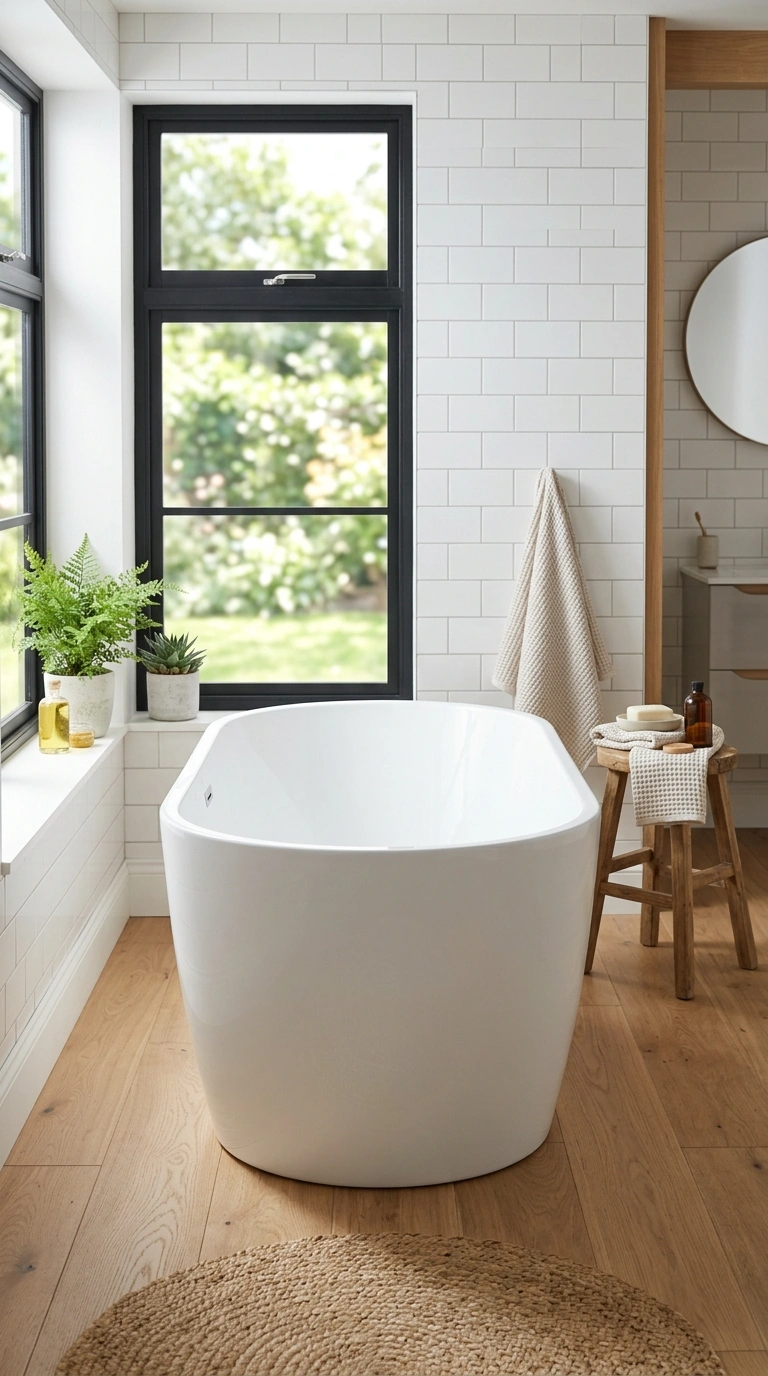
A freestanding tub positioned in the center of the bathroom or slightly forward from the wall, with visible space around all sides, reads as the room’s sculptural centerpiece rather than as a fixture pushed against a wall. The freestanding placement gives the tub the breathing room that makes it look like a piece of furniture rather than an appliance. Position the tub where it catches the best natural light, ideally near a window where morning or afternoon sun falls across the water. The space around the freestanding tub also makes cleaning easier and allows the tub’s shape to be appreciated from every angle.
2. Feature Wall Behind Tub
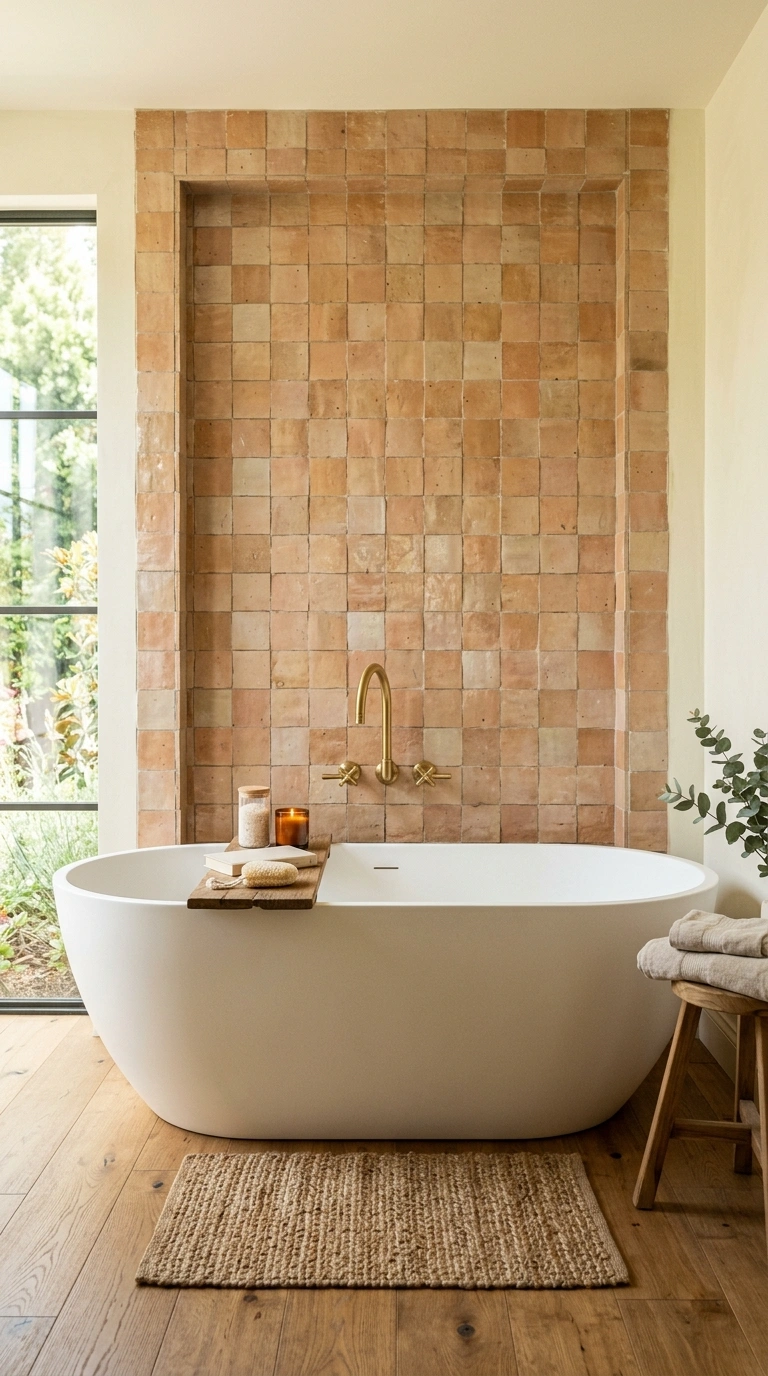
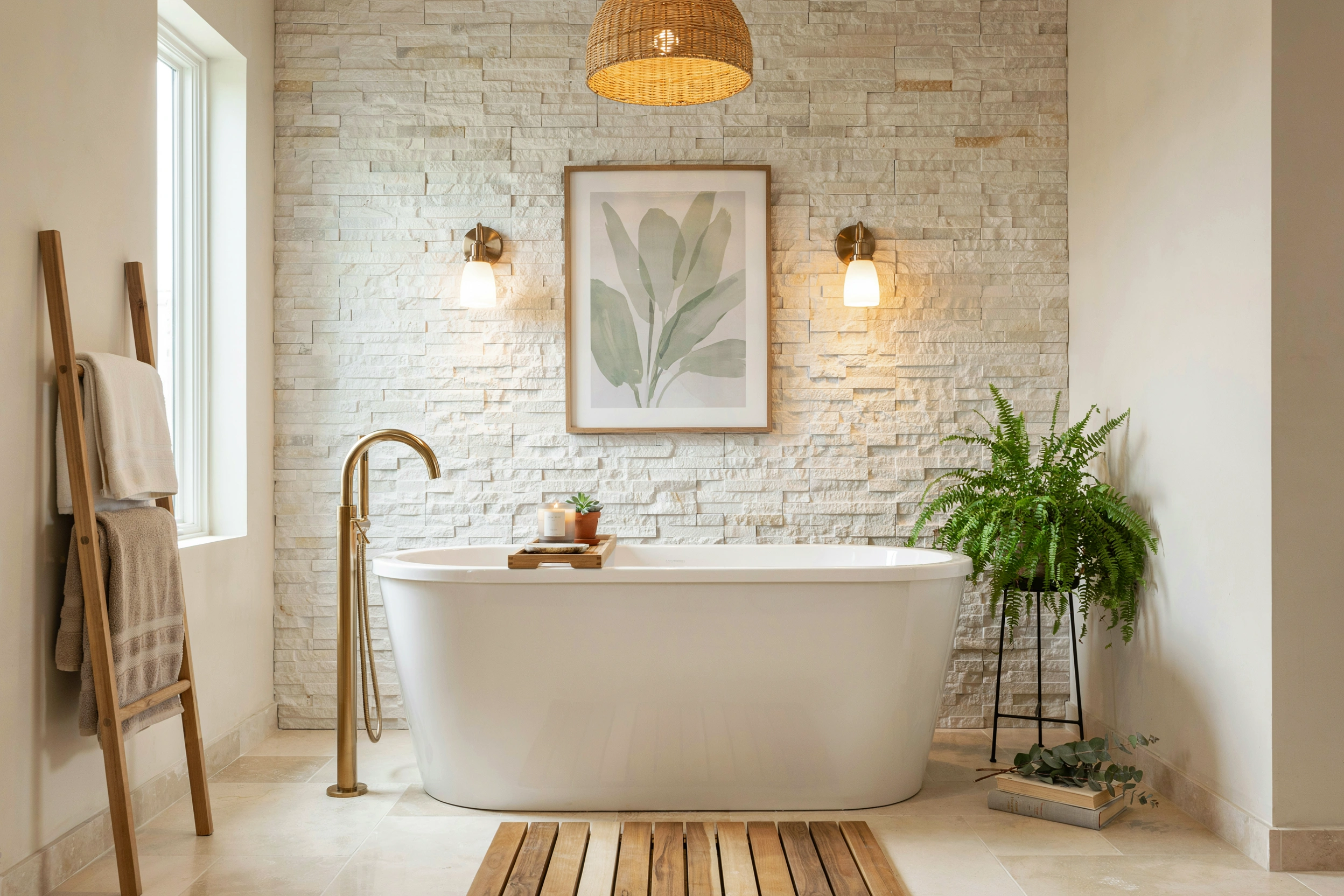
The wall directly behind or above the tub is the most prominent wall in the bathing zone and deserves the same design attention as any other feature wall in the home. A textured tile in a warm tone, a natural stone slab, a painted accent color, a subtle wallpaper pattern, or a simple shiplap treatment all add visual interest to the wall that frames the tub. The feature wall creates a backdrop for the tub that makes the entire zone look designed. Keep the treatment moisture-appropriate since the wall behind the tub receives regular humidity and occasional splashing.
3. Art Above the Tub
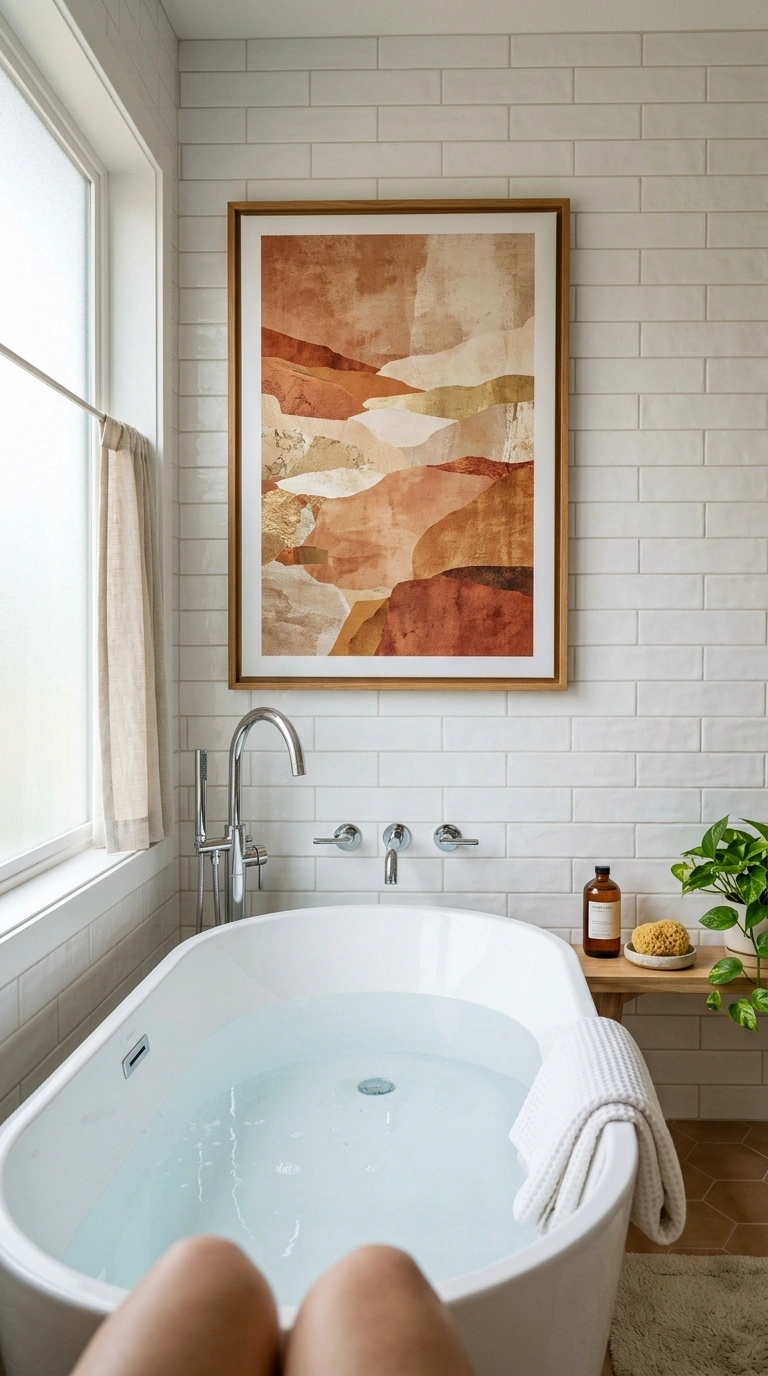
A piece of art hung on the wall above the tub adds visual content to the wall space that is viewed during every bath and makes the tub zone feel like a designed room rather than a wet utility area. Choose art that can tolerate bathroom humidity: a framed print behind glass, a canvas with a protective coating, or a waterproof print in a moisture-resistant frame. Position the art at a height that is visible from the bath and that does not hang low enough to be splashed. A single large piece is more impactful than several small ones in the humid tub zone. The same approach of using one strong art piece to anchor a wall also works throughout bathroom design, as covered in bathroom plant decor where the art and the plants together create a living gallery quality in the bathroom.
4. Plants Beside the Tub
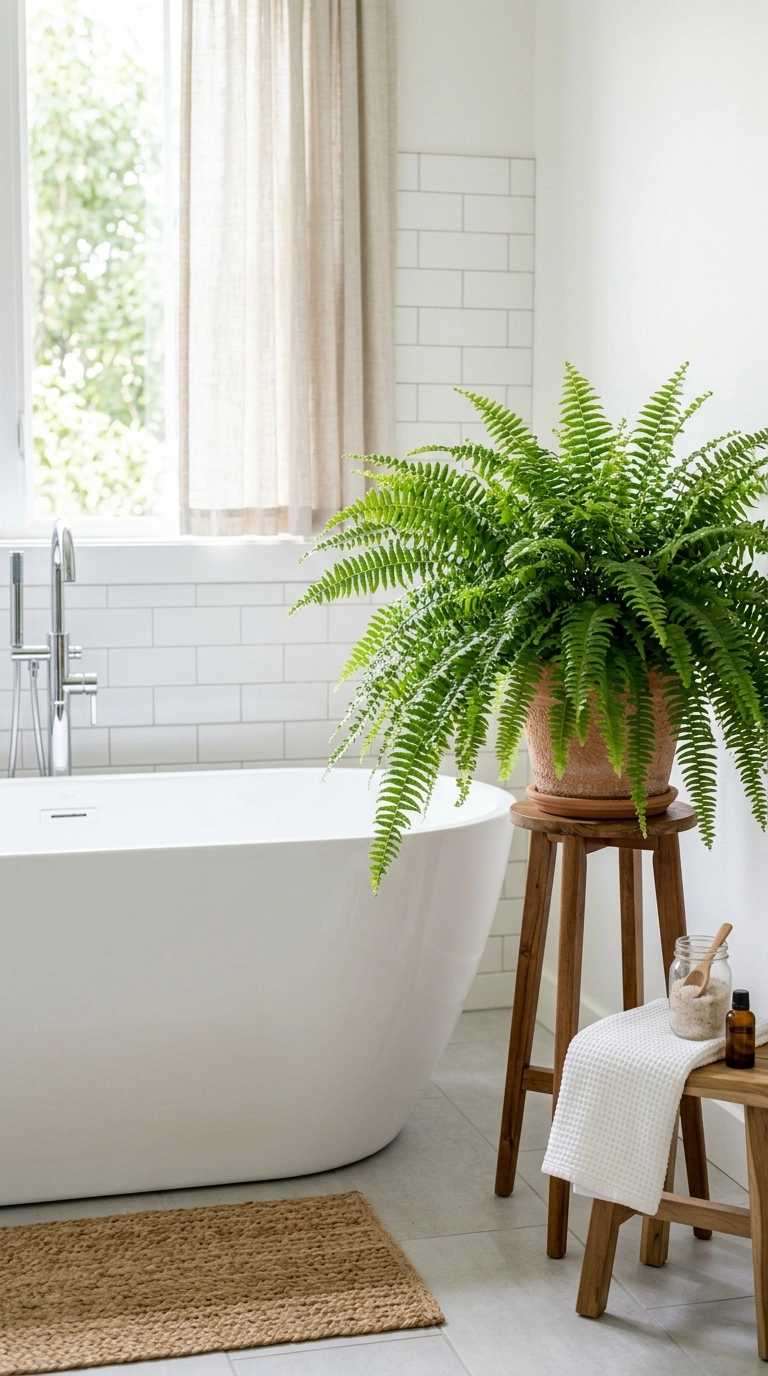
A floor plant beside the tub, a hanging planter above it, or a small plant on a stool nearby adds the living green quality that transforms the tub area from a wet zone into a garden bath. The humidity from regular baths creates ideal growing conditions for tropical plants like ferns, pothos, and peace lilies. A tall Boston fern on a stand beside a freestanding tub creates one of the most photographed and most spa-like bathroom arrangements available. Position the plant where it does not block access to the tub but where it is visible and enjoyable during the soak.
5. Warm Lighting Around Tub
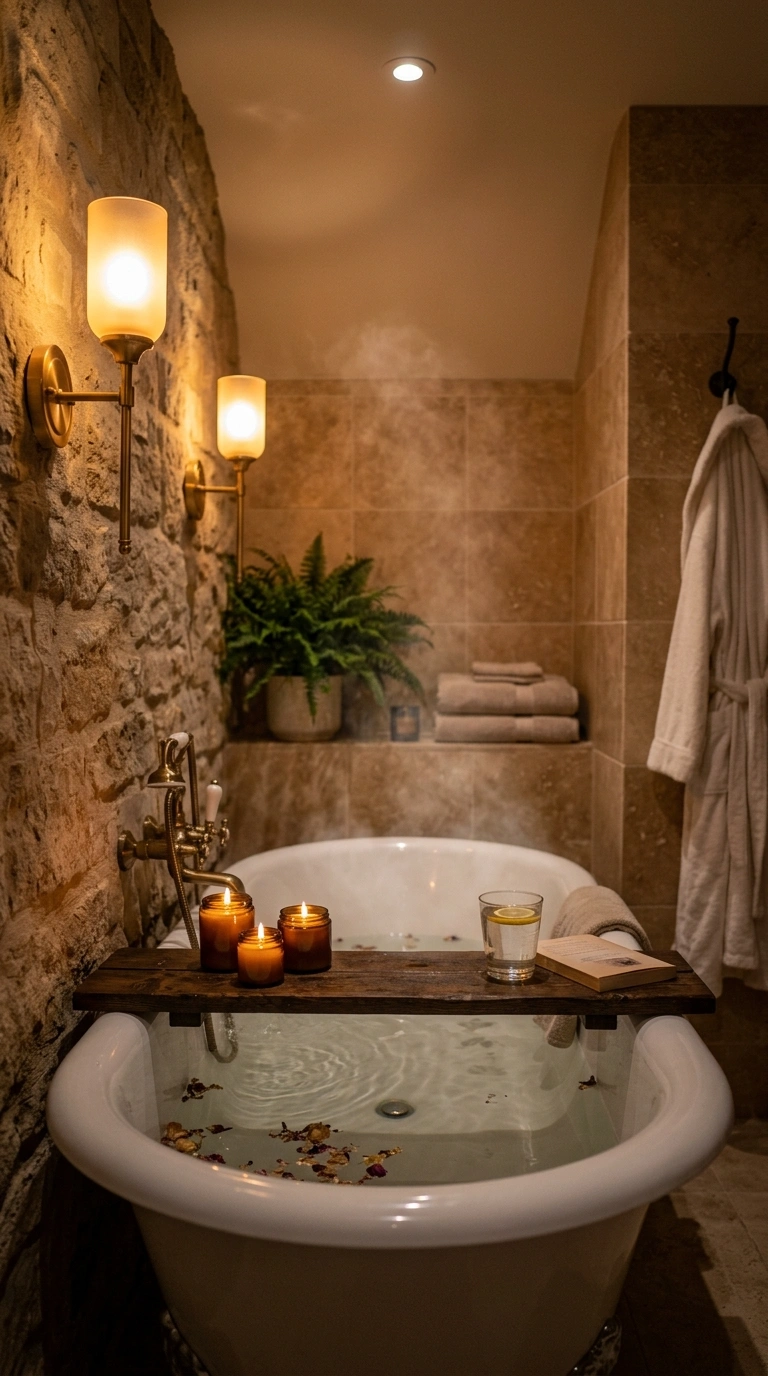
The lighting around the tub should be warm, dimmable, and atmospheric rather than bright and clinical. A dimmer on the overhead light, a pair of warm sconces on the wall beside the tub, candles on the tub tray or on a nearby shelf, and perhaps a small string of warm fairy lights along a high shelf together create the layered warm light that makes bath time feel like a genuine relaxation experience. The warm light makes the water, the skin, and the bathroom surfaces glow with a quality that cool bright light eliminates entirely. Use bulbs in the 2200K to 2700K range for the most flattering and relaxing light quality.
6. Vintage Stool Side Table
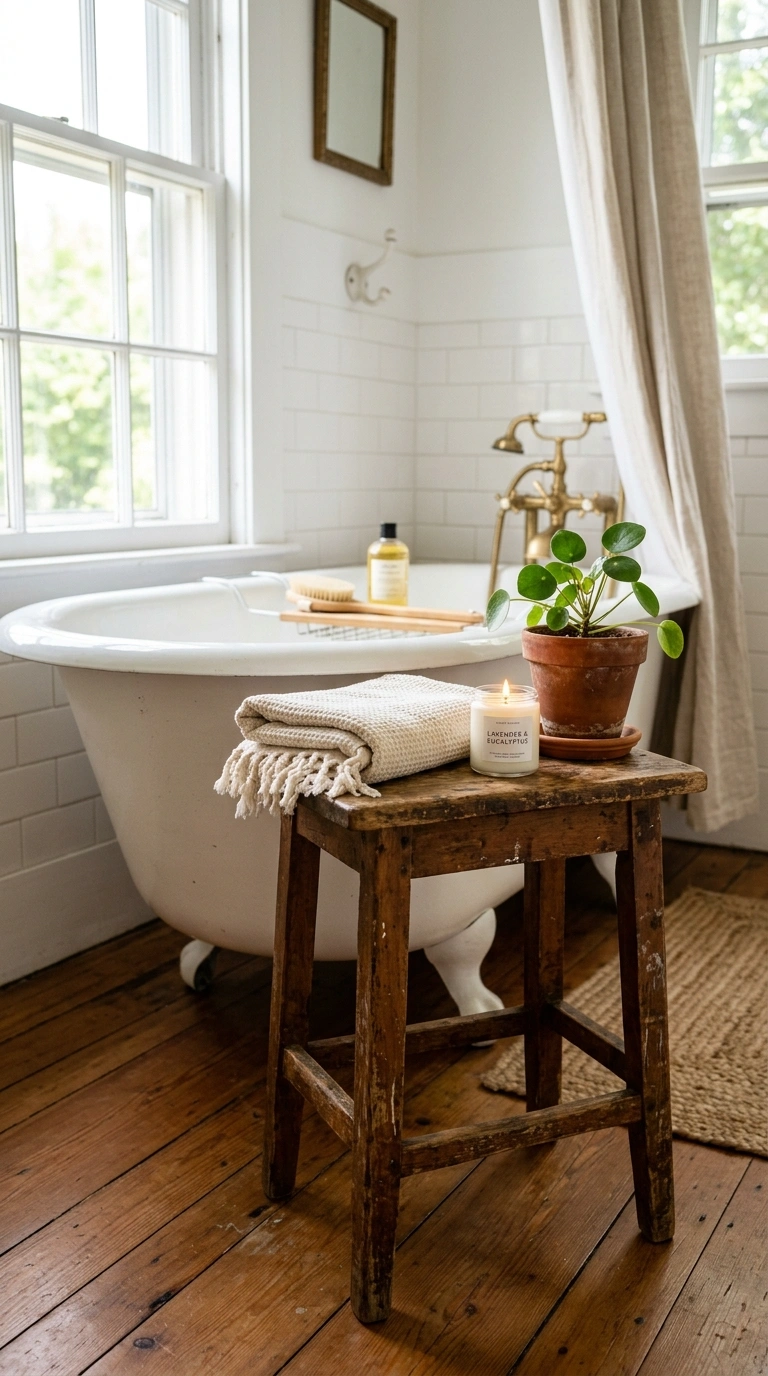
A small vintage wooden stool placed beside the tub serves as a side table for holding a folded towel, a candle, a small plant, a glass of water, or a book. The stool adds a warm furniture element to the tub zone that built-in ledges and tub rims cannot match. A slightly worn, slightly aged stool with visible character adds the kind of human warmth that new furniture lacks. The stool should be sturdy enough to hold a drink or a candle securely and positioned close enough to reach from the tub without leaning.
7. Bath Tray Styled Display
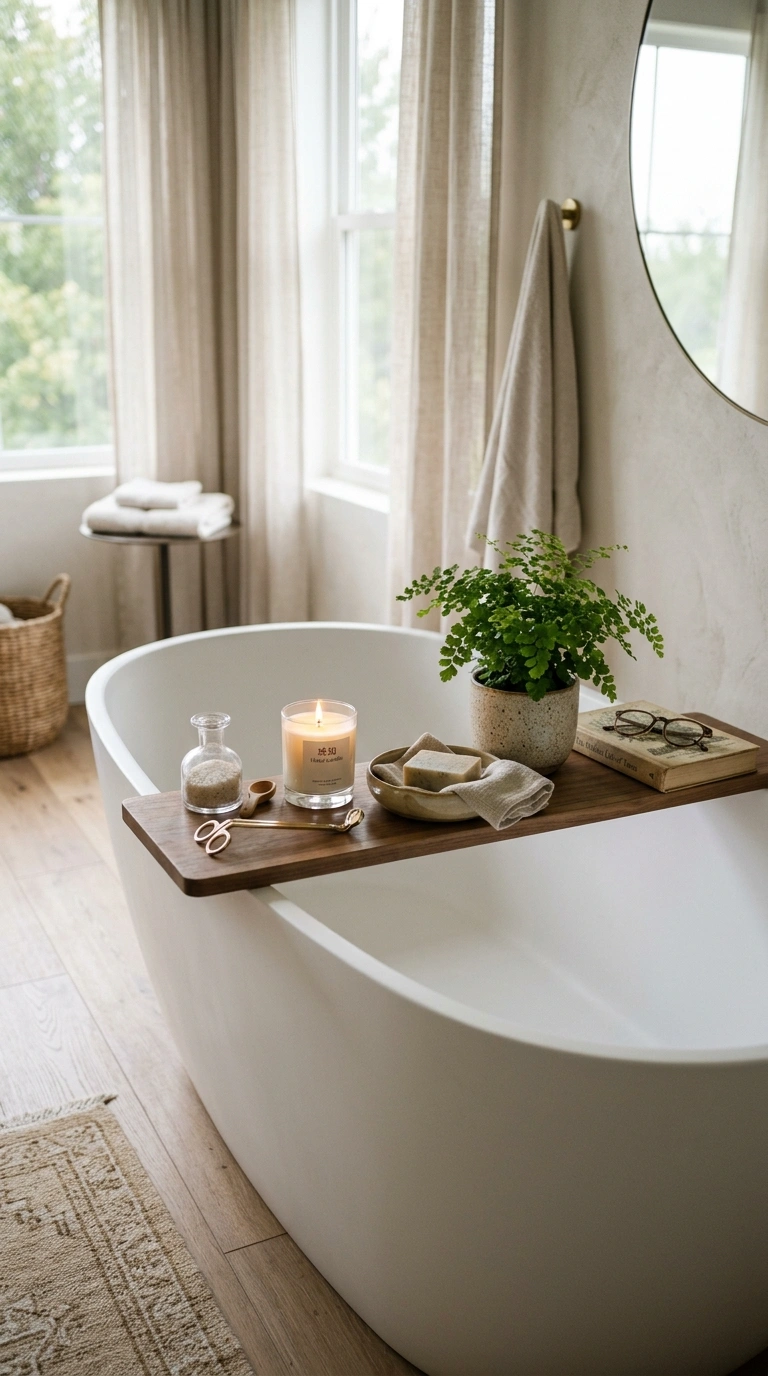
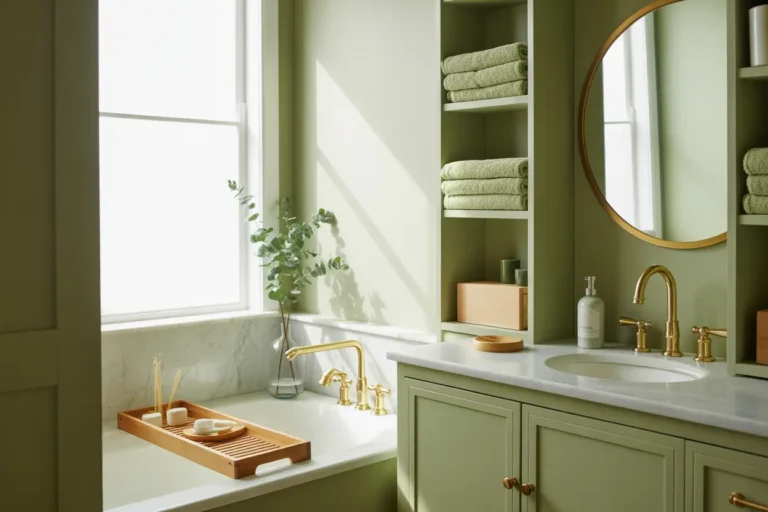
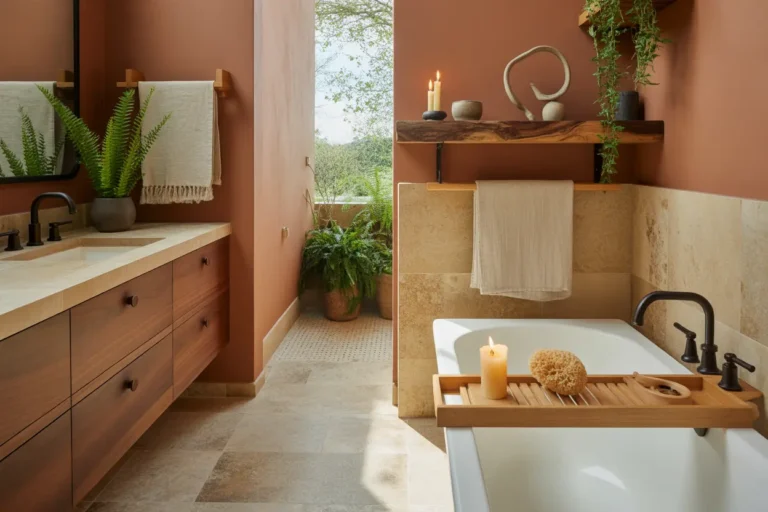
A bath tray laid across the tub and styled with a candle, a small plant, and one beautiful object turns the tub into a styled furniture piece that reads as beautiful even when not in use. The styled tray creates a complete vignette across the tub that signals the bath is a valued ritual rather than a neglected fixture. Keep the tray styling simple and intentional: three to four objects maximum, arranged with breathing room between them. The tray becomes the tub’s equivalent of a styled coffee table in a living room. For a complete guide to choosing and styling bath trays, the bathtub tray ideas guide covers materials, formats, and the specific objects that make the tray work as both function and decor.
8. Tub Surround Material Choice
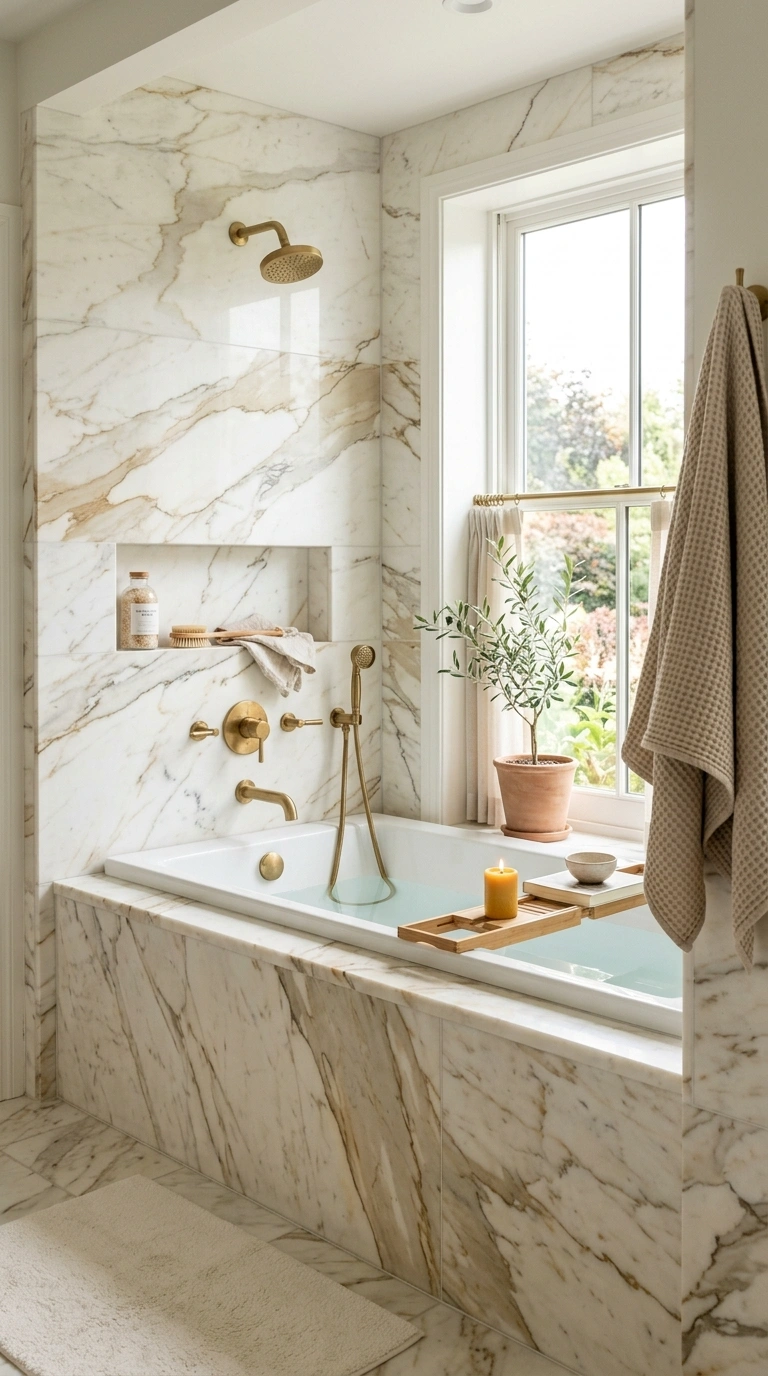
The material used on the tub surround, the surface directly around and above a built-in tub, significantly affects how the tub area reads. Standard white tile around a built-in tub reads as functional and generic. A natural stone surround in marble, travertine, or limestone reads as luxurious. A large-format porcelain in a warm tone reads as modern and spa-like. A wood-look tile reads as warm and organic. The surround material is the largest visible surface in the tub zone and its quality directly determines how the area reads aesthetically.
9. Niche or Shelf in Wall
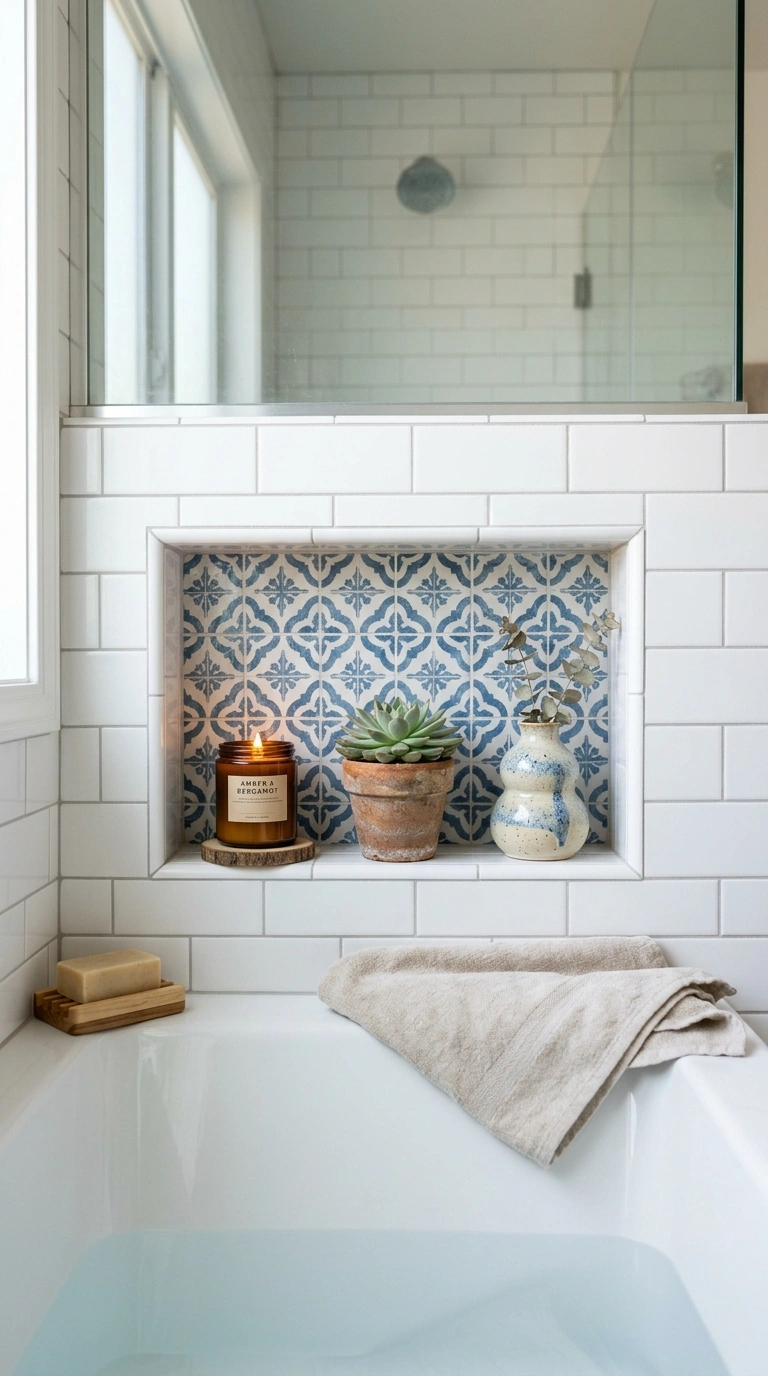
A recessed niche or a small shelf built into the wall beside or above the tub provides a permanent storage and display surface for bath products, a candle, and a small decorative element. The niche keeps items off the tub rim and off the floor while providing a styled display spot that is visible during every bath. Tile the inside of the niche in a contrasting or accent tile for a design moment, or keep it in the same tile as the surrounding wall for a seamless look. A niche at a height of about forty-eight inches from the floor is accessible from the bath without requiring reaching or stretching.
10. Mirror Above Tub Feature
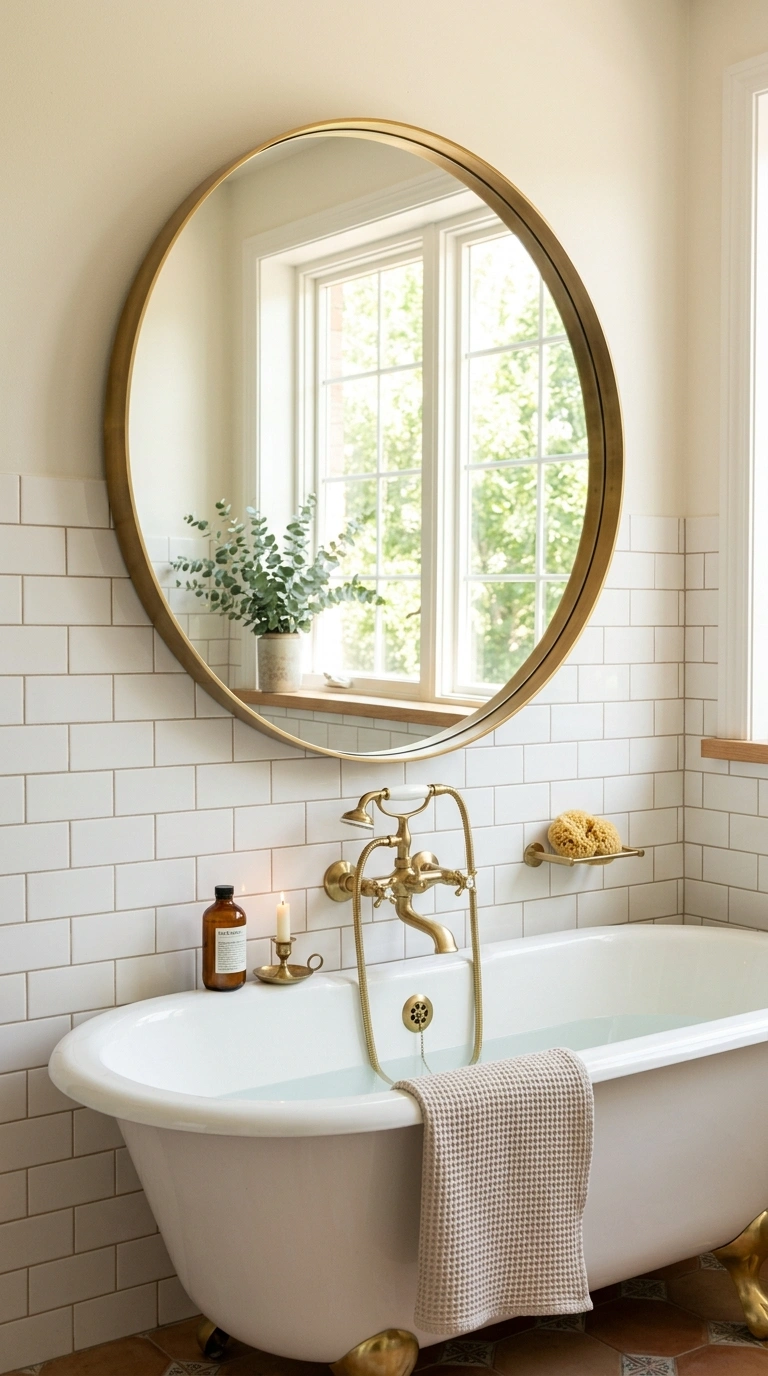
A large mirror or a decorative mirror hung above the tub reflects the bathroom light back into the tub zone and makes the area feel more open and brighter than the surrounding walls alone can achieve. The mirror also adds a decorative element to the wall above the tub that art or empty wall space provides differently. A round mirror in a warm brass frame, a vintage mirror with an ornate frame, or a simple frameless rectangular mirror all work depending on the bathroom’s style. Position the mirror high enough to avoid splash damage and where it reflects the best available light source.
11. Freestanding Tub Faucet
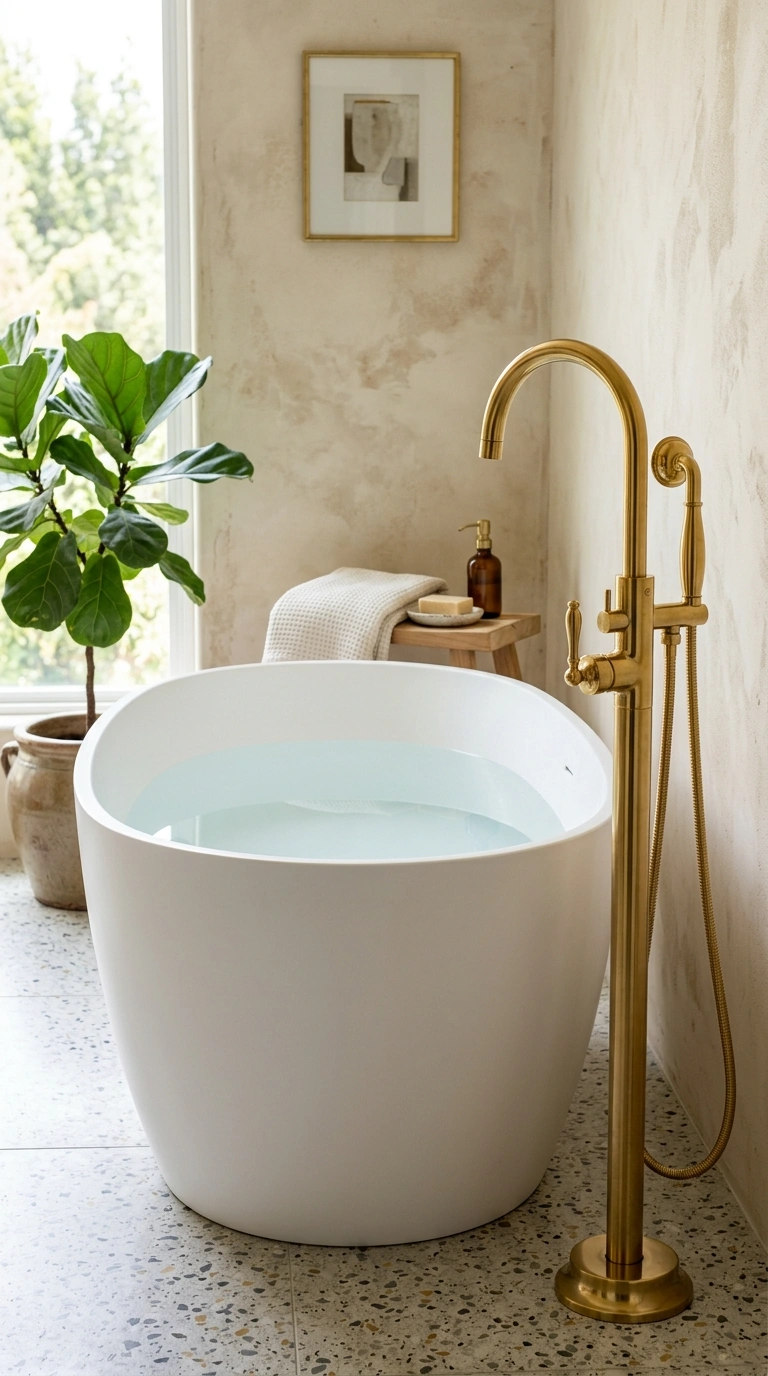
The faucet on a freestanding tub is a visible design element that either enhances or undermines the tub’s aesthetic. A floor-mounted tub filler in polished brass, brushed nickel, matte black, or chrome becomes a sculptural detail that draws the eye and adds material richness to the tub zone. Choose a faucet style that suits the tub shape: a sleek modern filler for a clean-lined contemporary tub, a traditional cross-handle filler for a clawfoot or classic tub. The faucet is one of the most-photographed elements in any freestanding tub arrangement and deserves the same design consideration as the tub itself.
12. Towel Display Near Tub
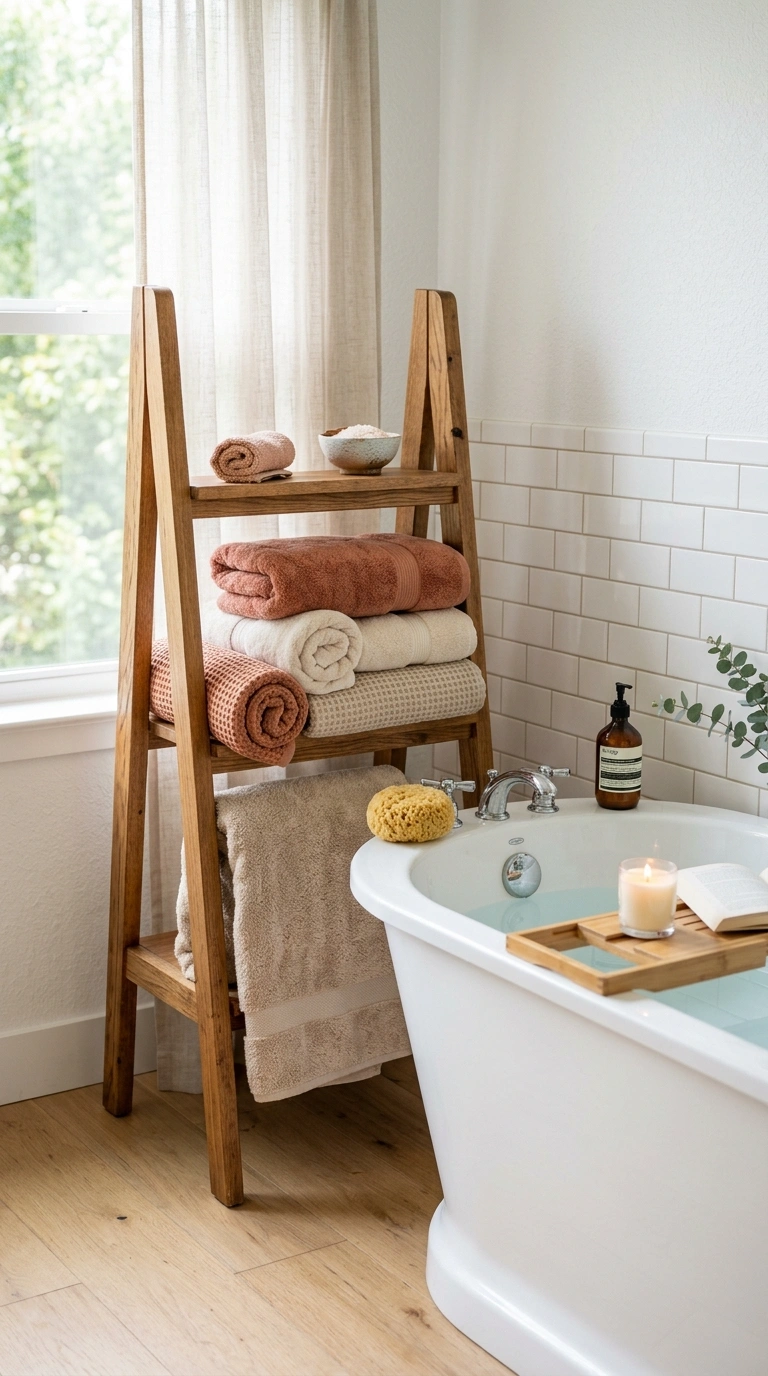
A set of thick, warm-toned towels displayed on a rack, a ladder, or a stool beside the tub adds the soft textile element that makes the tub area feel genuinely spa-like. The towels should be within arm’s reach of the tub so the bather can grab one immediately upon standing. Choose towels in a warm coordinated color rather than white, which can read as hotel-generic rather than spa-personal. Rolled towels in a basket, folded towels on a vintage stool, or hung towels on a warm wood ladder all create different visual impressions but all provide the essential comfort of a warm dry towel immediately available after the bath.
13. Eucalyptus Bundle Hanging
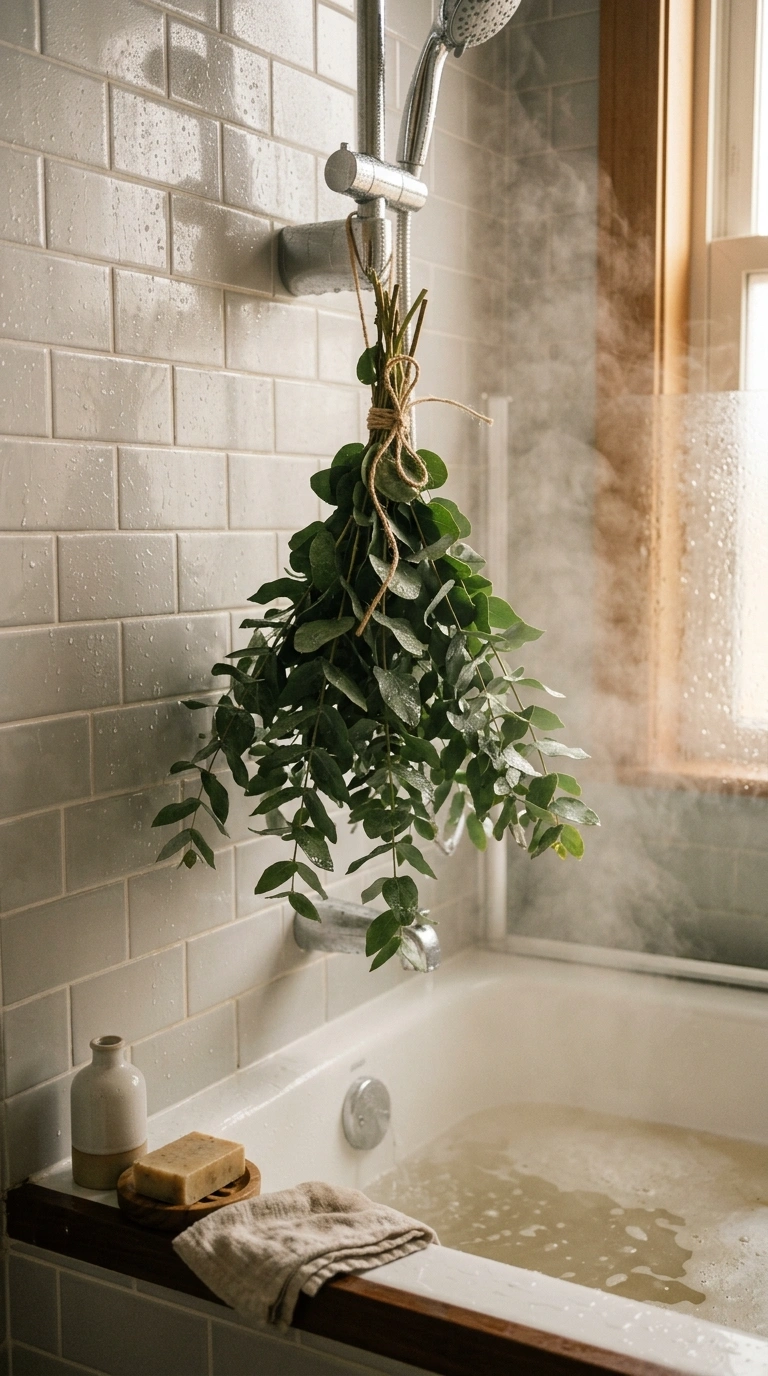
A bundle of fresh eucalyptus tied with twine and hung from the shower fixture above the tub or from a hook on the wall near the tub releases its natural essential oils into the steam during a hot bath, creating an aromatherapy experience that manufactured products cannot replicate. The eucalyptus bundle is the single cheapest and most effective spa element available for a bathtub area. Replace it every two to three weeks as the scent fades. The visual contribution of fresh green leaves hanging near the tub adds natural beauty alongside the aromatic benefit.
14. Statement Pendant Above Tub
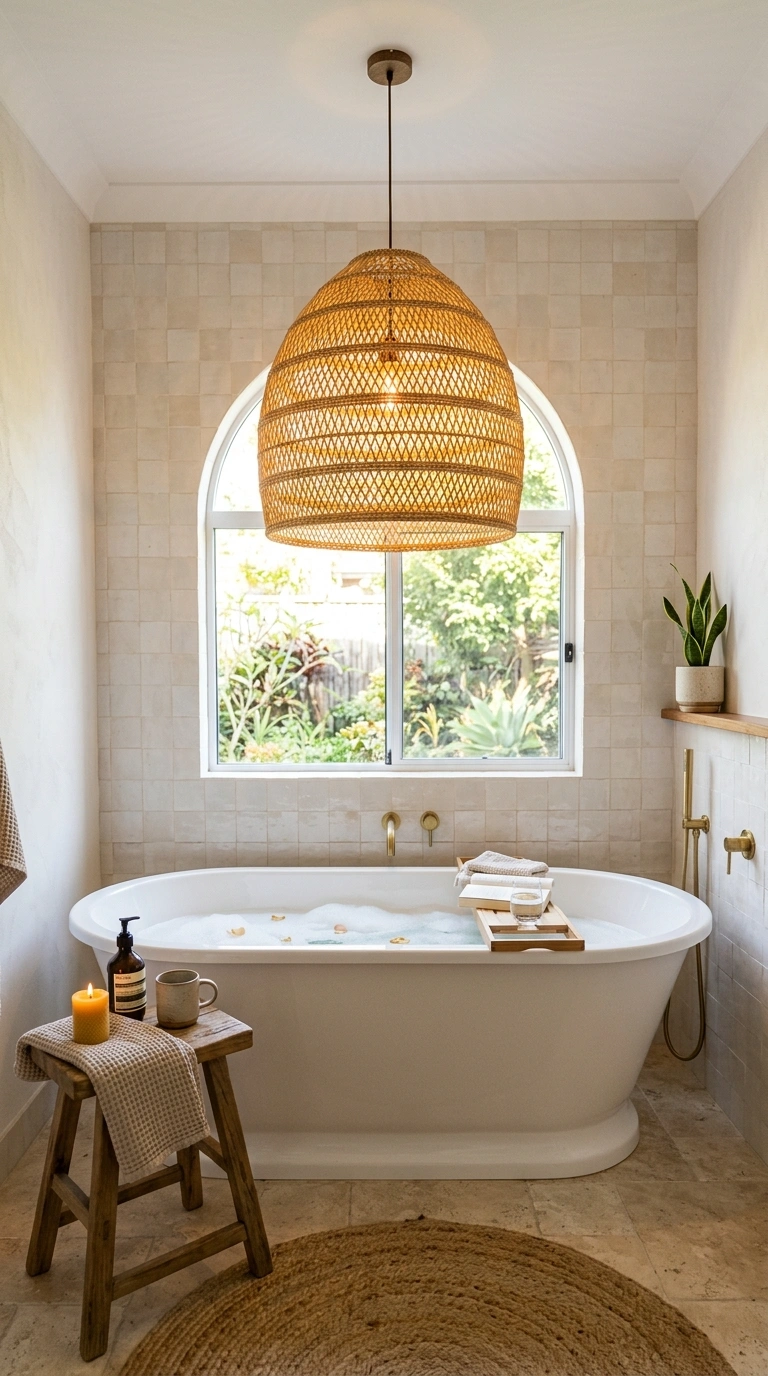
A pendant light or a small chandelier hung directly above the tub creates a dramatic overhead focal point that makes the tub the clear visual center of the bathroom. The pendant should be at a height that does not interfere with standing in the tub and should be rated for bathroom moisture conditions. A warm woven pendant, a simple brass pendant, a small crystal chandelier, or a modern globe pendant all add design character overhead that a standard flush-mount ceiling fixture cannot match. The pendant above the tub is one of the most impactful single design decisions for elevating the tub zone.
15. Tub Apron Panel Accent
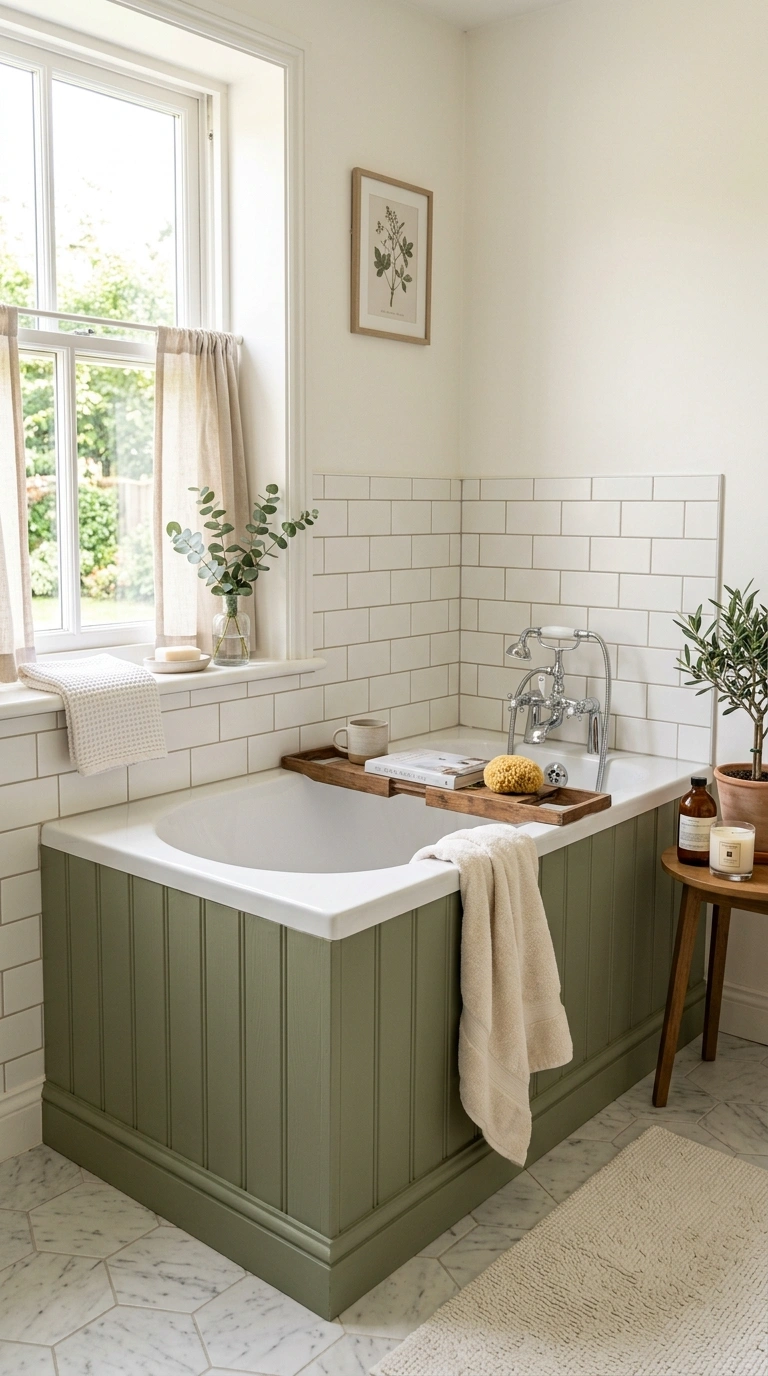
For built-in tubs where the front panel or apron is visible, treating the apron as a design surface rather than leaving it in plain white plastic or tile transforms the tub’s appearance at its most visible face. A beadboard panel painted in a warm color, a tile mosaic in an accent pattern, or a simple wood panel stained to match the bathroom vanity all add design quality to the tub face. The apron is one of the largest visible surfaces of a built-in tub and its treatment significantly affects how the tub reads in the overall bathroom design.
16. Step or Platform Elevation
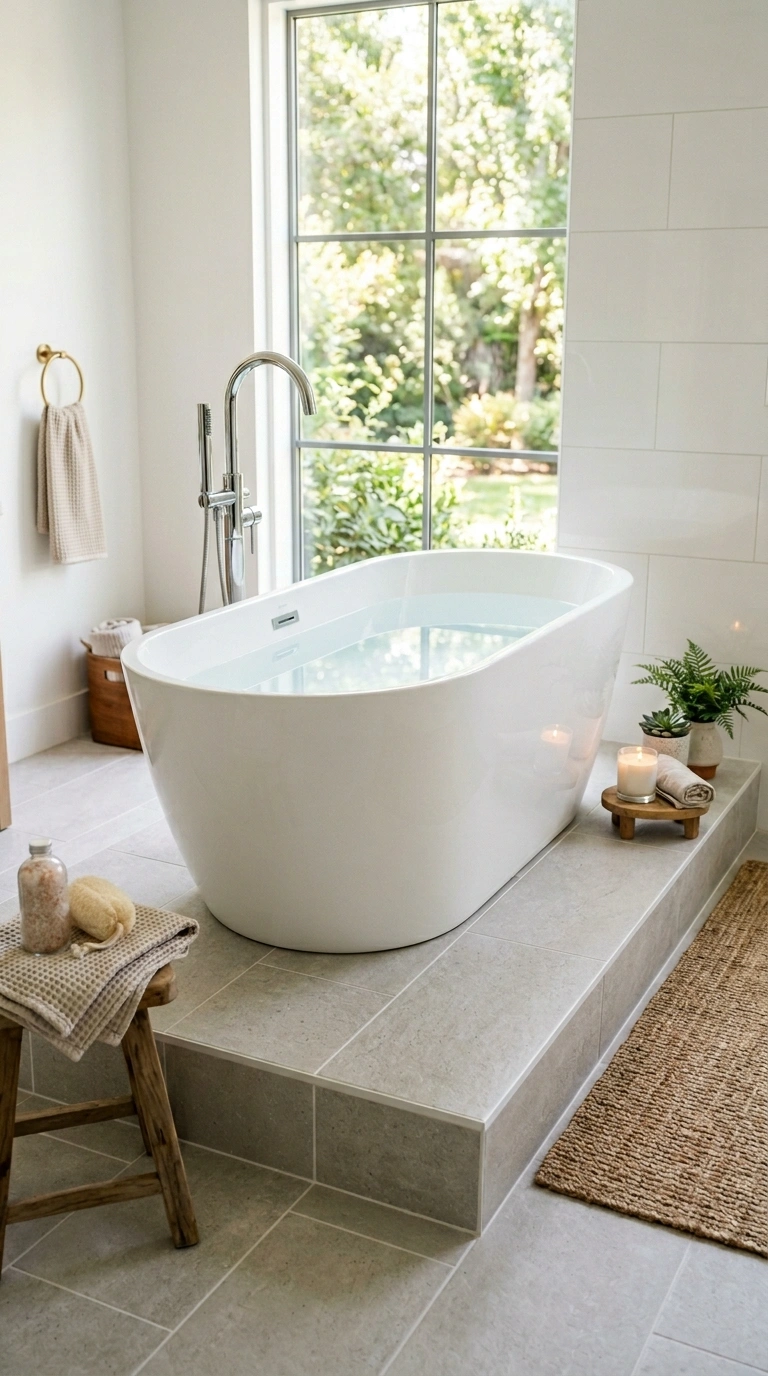
Elevating the tub on a small platform or a single step creates a visual pedestal that makes the tub feel like a more important and more dramatic element in the bathroom. The platform also makes getting in and out of a deep tub easier and provides a small ledge around the tub base for placing a candle or a small plant. Tile the platform in the same material as the bathroom floor or in a contrasting accent material for a different look. The elevated tub reads as a deliberate design feature rather than as a fixture placed on the flat floor.
17. Window Treatment at Tub
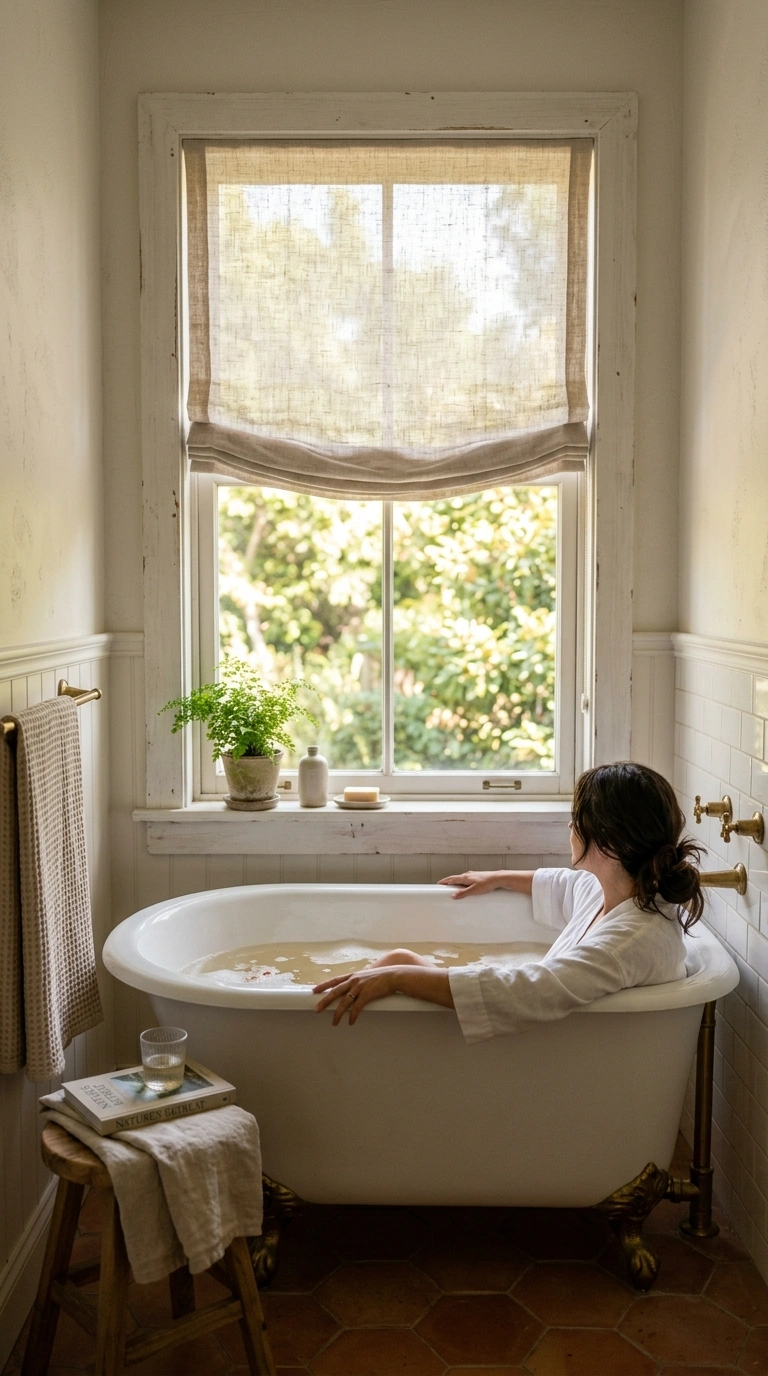
If the tub is positioned near a window, the window treatment affects both the privacy and the atmosphere of the bathing experience. A sheer linen shade filters natural light beautifully while providing privacy. A Roman shade in a warm fabric adds a tailored quality. A frosted window film provides permanent privacy without any fabric treatment at all. The window treatment should allow natural light during daylight baths while providing complete privacy. Position the treatment controls within reach of the tub so they can be adjusted during the bath itself.
18. Tub Floor Rug or Mat
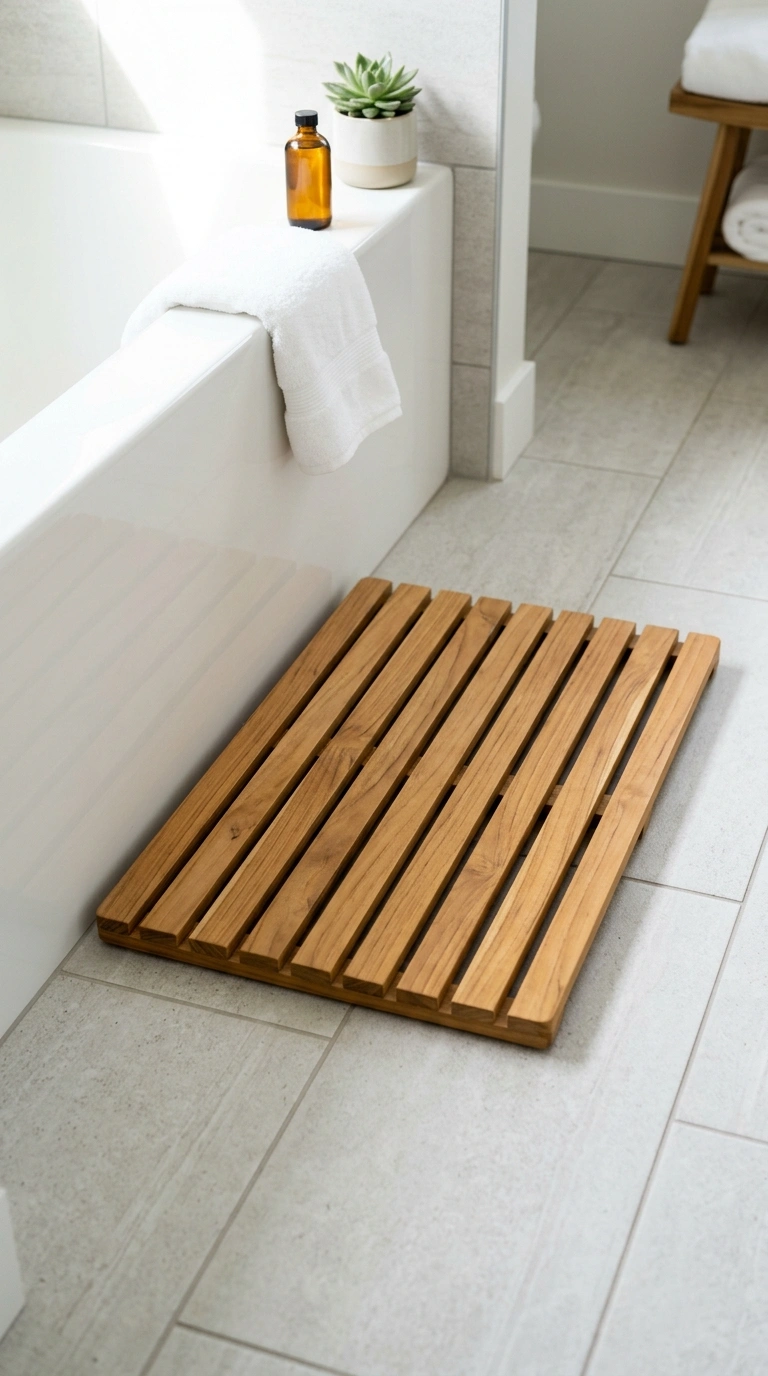
A beautiful bath rug or a natural fiber mat positioned beside the tub where feet land when stepping out adds comfort, safety, and a decorative floor element to the tub zone. Choose a rug that feels good under wet feet and that dries quickly between uses. A thick cotton bath rug in a warm tone, a natural wood bath mat with slatted drainage, or a soft microfiber rug all provide the warm, non-slip surface the wet floor beside the tub needs. The rug also adds a visual detail that defines the tub zone on the floor.
19. Small Shelf Vignette
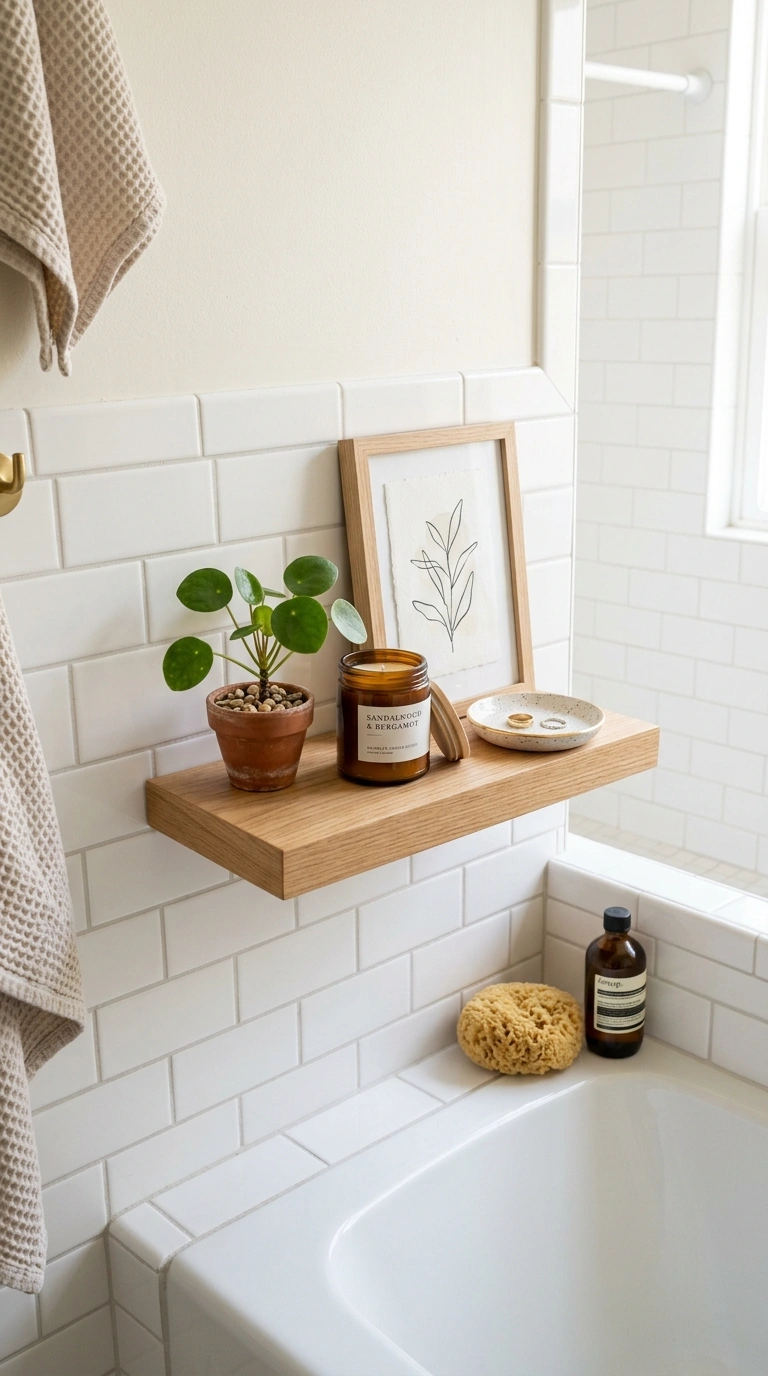
A small floating shelf mounted on the wall beside the tub at a reachable height holds a styled vignette of three to four objects: a candle, a small plant, a beautiful ceramic dish for a ring or jewelry removed before bathing, and a small piece of art leaned against the wall. The shelf creates a styled surface near the tub that is accessible during the bath and that adds visual content to the tub wall. The vignette should be edited and intentional rather than crowded, with each object earning its place through both beauty and genuine use during the bath.
20. Matching Hardware Consistency
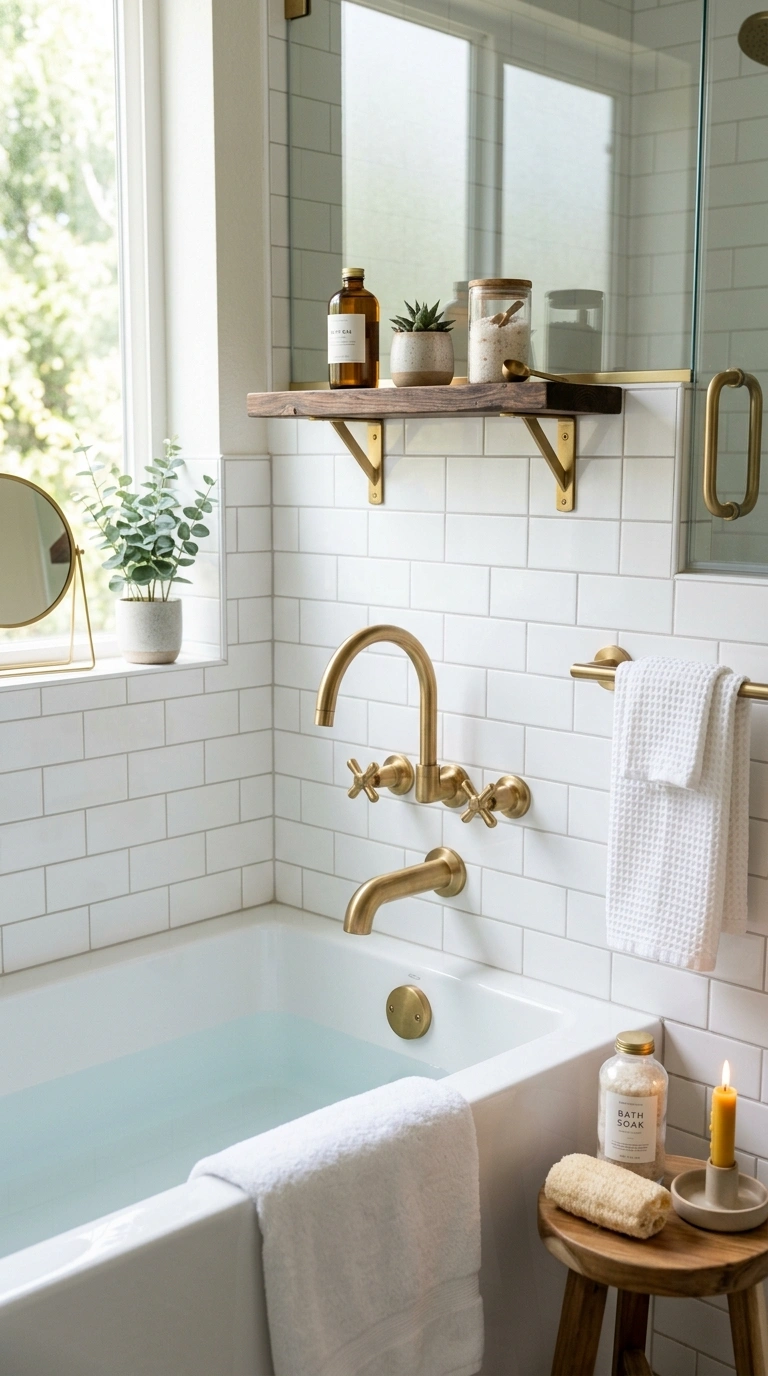
The hardware in the tub zone, the faucet, the drain, the overflow cover, the towel bar, the hooks, and any shelf brackets, should all be in a matching metallic finish for the most cohesive and designed look. Matching brass throughout, matching matte black throughout, or matching chrome throughout creates visual consistency that mixed metals cannot achieve. The matching hardware ties all the individual elements of the tub zone into a single coherent design story. Upgrade any mismatched hardware to the chosen finish for the most polished result.
21. Tub Zone Separation
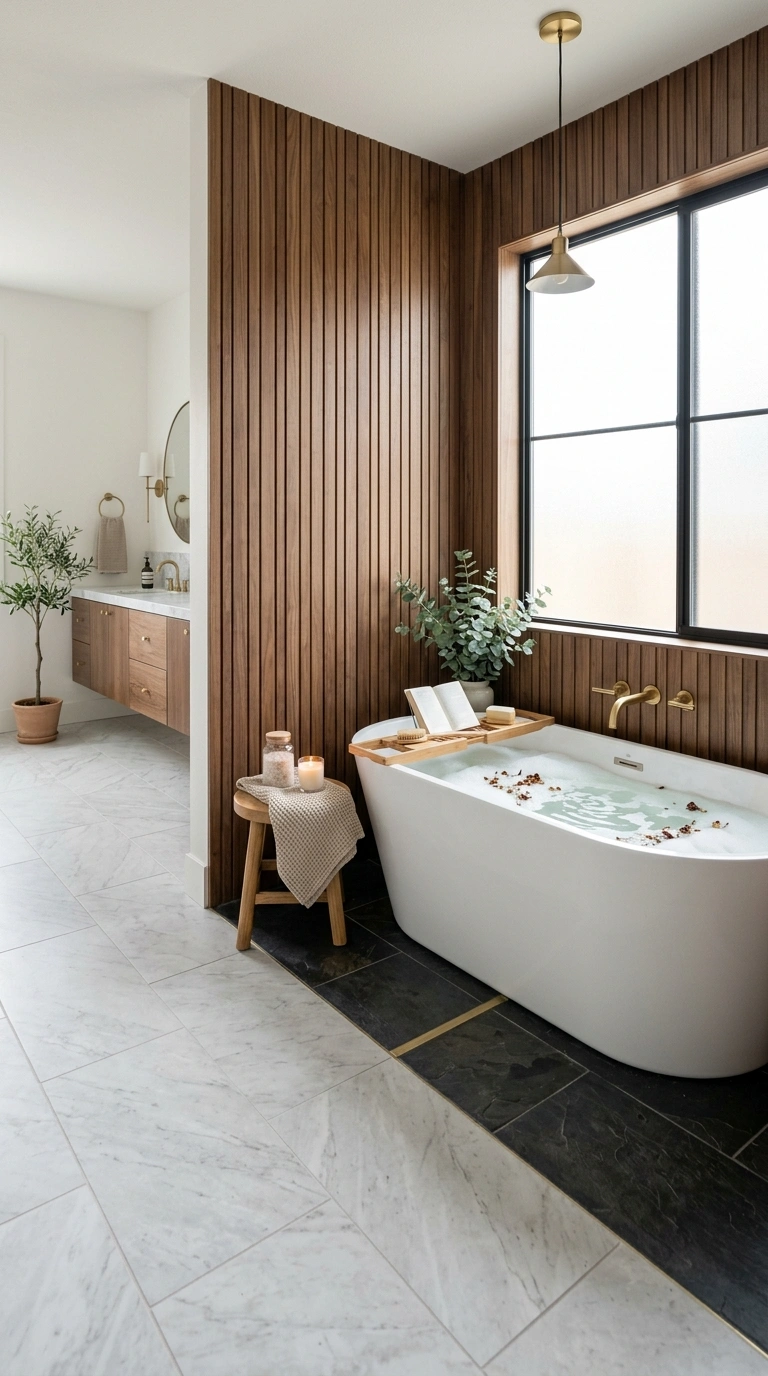
In bathrooms where the tub shares the room with the toilet and the vanity, creating a visual separation between the tub zone and the rest of the bathroom makes the tub area feel like its own space rather than one fixture among several. A half-wall, a glass partition, a change in floor material, a different wall treatment behind the tub, or even a different paint color on the tub wall all create the visual boundary that separates the bathing zone from the rest of the room. The separation makes the tub area feel like a dedicated spa zone within the larger bathroom.
22. Keep It Simple and Warm
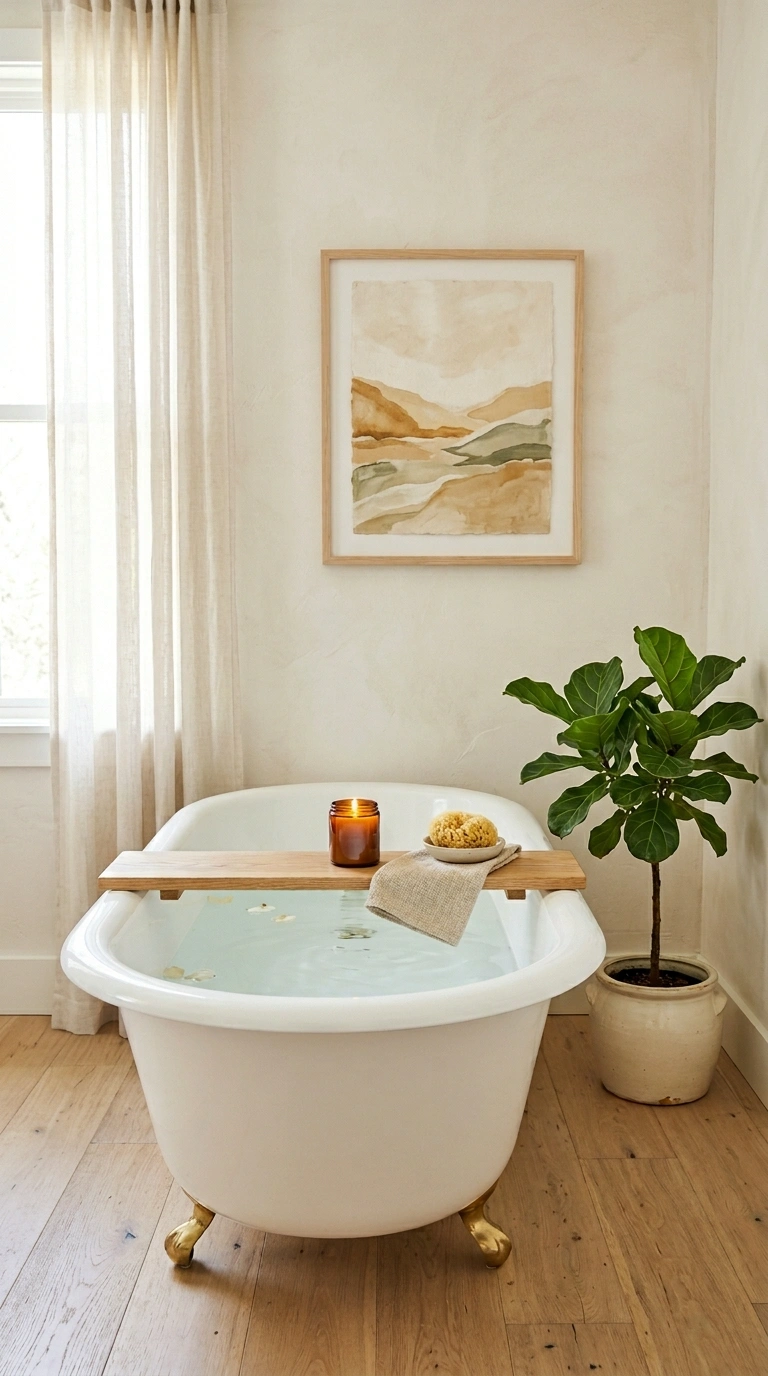
The most beautiful bathtub areas are not the ones with the most decorative elements around them. They are the ones where a few deliberate choices, the right material on the surround, one piece of art on the wall, a plant beside the tub, a tray on the tub, and warm lighting overhead, work together to create a zone that feels warm and inviting. The simplicity is what gives each element room to register and what keeps the tub area feeling like a spa rather than a decorated corner. Choose two or three of these ideas for your specific bathroom and let the warm water and the warm light do the rest. For handmade accessories that complete the tub zone styling with genuine artisan quality, the DIY clay tray guide covers how to create beautiful bathroom pieces that look expensive but cost almost nothing to make.
The bathtub area becomes the most beautiful part of the bathroom when it is treated as a designed zone rather than a functional fixture. The right wall treatment behind it, warm lighting around it, a plant beside it, a styled tray across it, and matching hardware throughout together create a tub zone that feels like a destination within the bathroom. Choose the decisions that match your specific tub and bathroom layout and the result is a bathing experience that looks and feels significantly better than the standard tub in a tiled alcove.